06 — Melo
Calm tech for growing minds.
Personal Product Concept · UX Strategy · Inclusive Design
2025 - 2026
What if a smart assistant could do a little less, but mean a whole lot more?
Melo started with a question I kept coming back to as a parent: Why does technology designed to make life easier often introduce so many distractions?
I loved the convenience of smart speakers—music, reminders, voice assistance—but wanted something more intentional, with better parental controls and fewer opportunities to get sidetracked.
So I began imagining Melo, a sensory-conscious smart companion designed to support everyday routines, independence, and emotional well-being, particularly for neurodivergent minds.
The Short Version
Less noise. More intention.
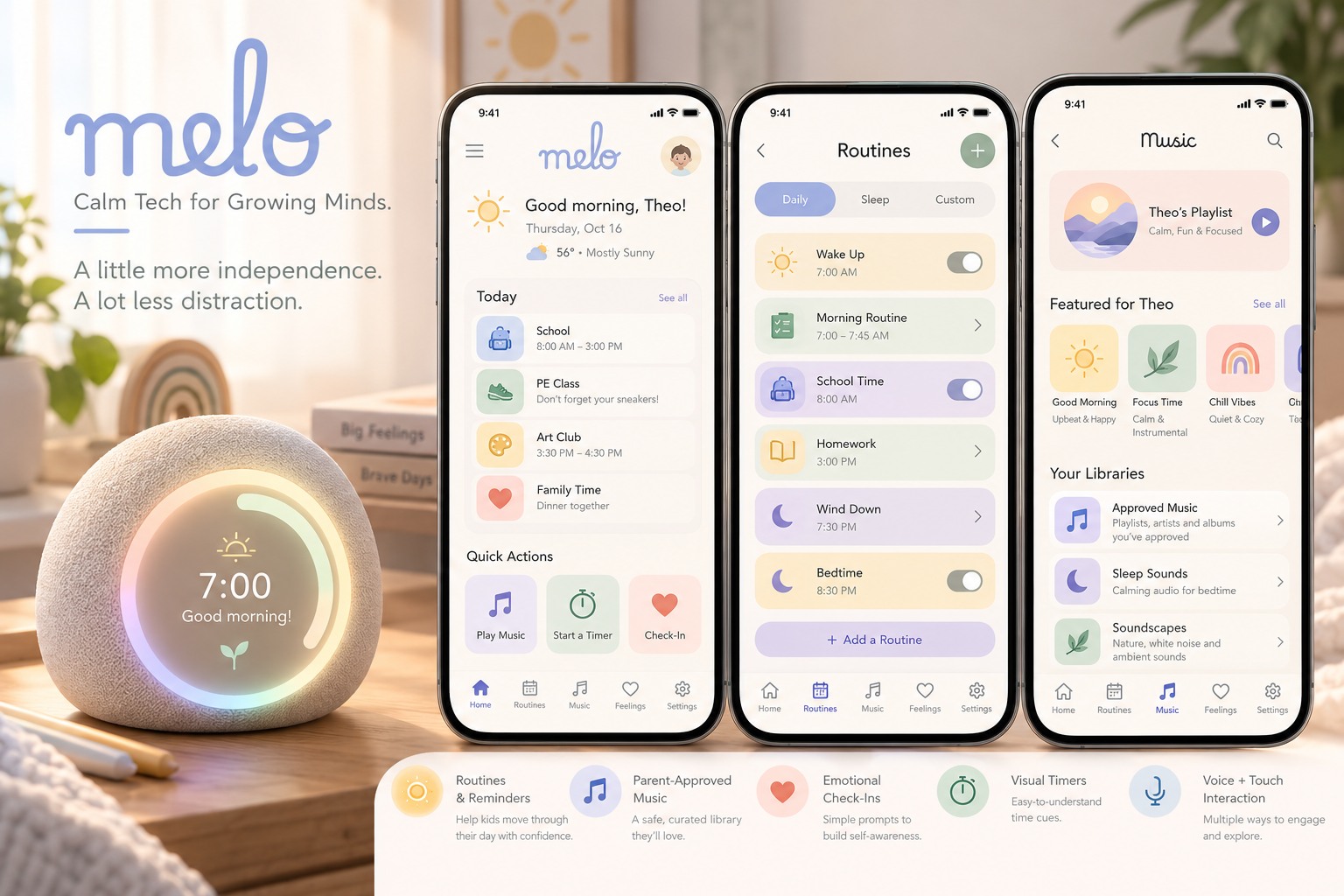
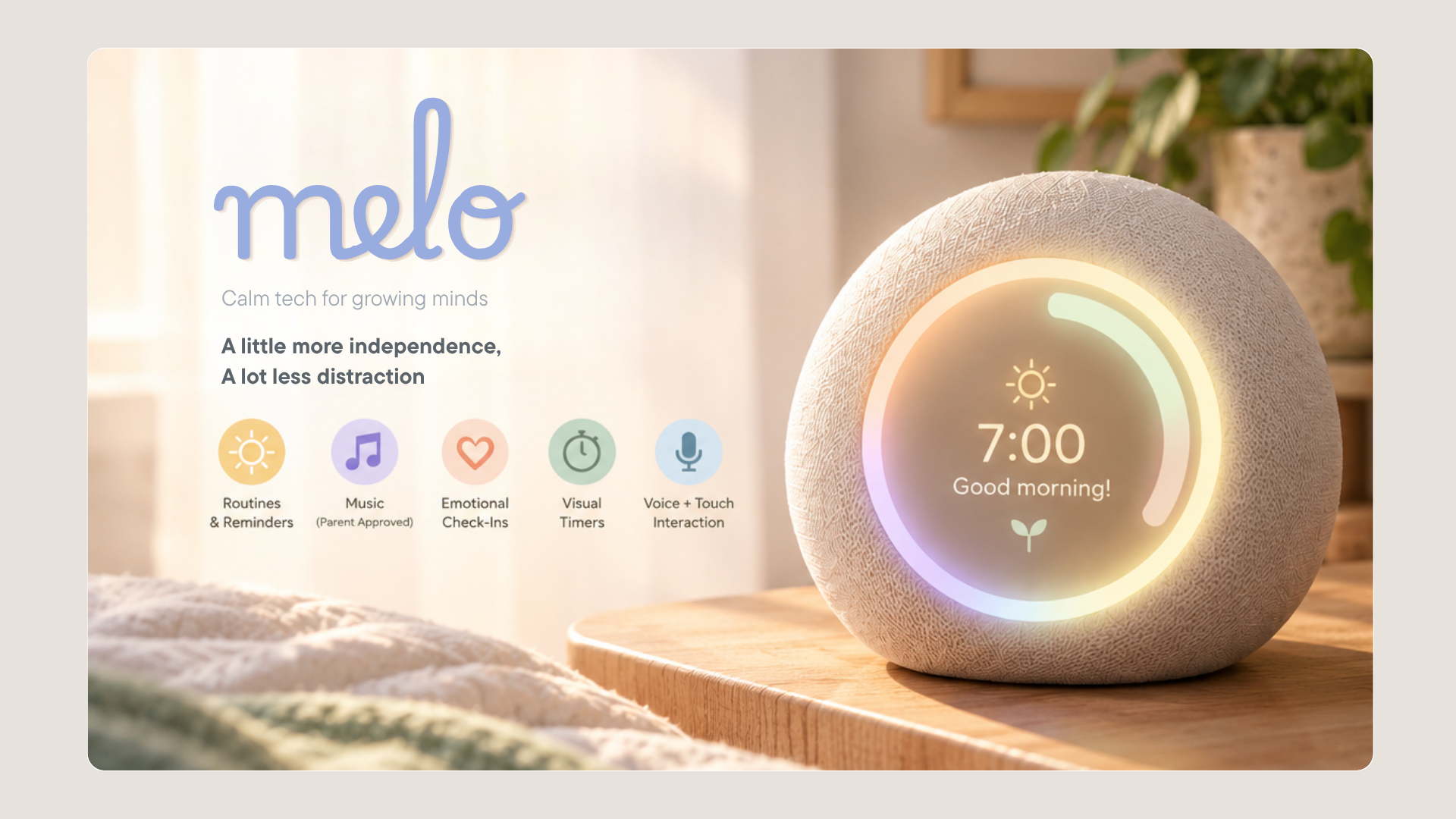
Melo combines familiar voice interactions with simple tactile controls, gentle lighting, and calming audio. Think gradual wake-up alarms, personalized morning reminders, illuminated visual timers, parent-approved music, and short, guided check-ins for mindfulness or emotional reflection.
A companion app would give caregivers control over routines, content, and conversations—allowing children to explore a little more independently within thoughtful boundaries.
The goal isn't another assistant that does everything. It's one that helps with the things that matter.
Designed around everyday moments.
Melo is still an early-stage concept, but exploring it has challenged me to think beyond traditional screen-based UX.
→ How can voice and touch work together to create an intuitive experience?
→ How do we make technology responsive without making it distracting?
→ And how can we support independence while giving caregivers peace of mind?
These questions continue to shape Melo's physical design, interactions, and prototype exploration.
A little idea with room to grow.
What began as a personal parenting challenge has become an exploration into more thoughtful, accessible technology.
While the initial concept focuses on children, I see opportunities for Melo to support neurodivergent teens and adults through personalized routines, predictable interactions, and sensory-conscious design.
Sometimes the most helpful technology knows when to keep things simple.