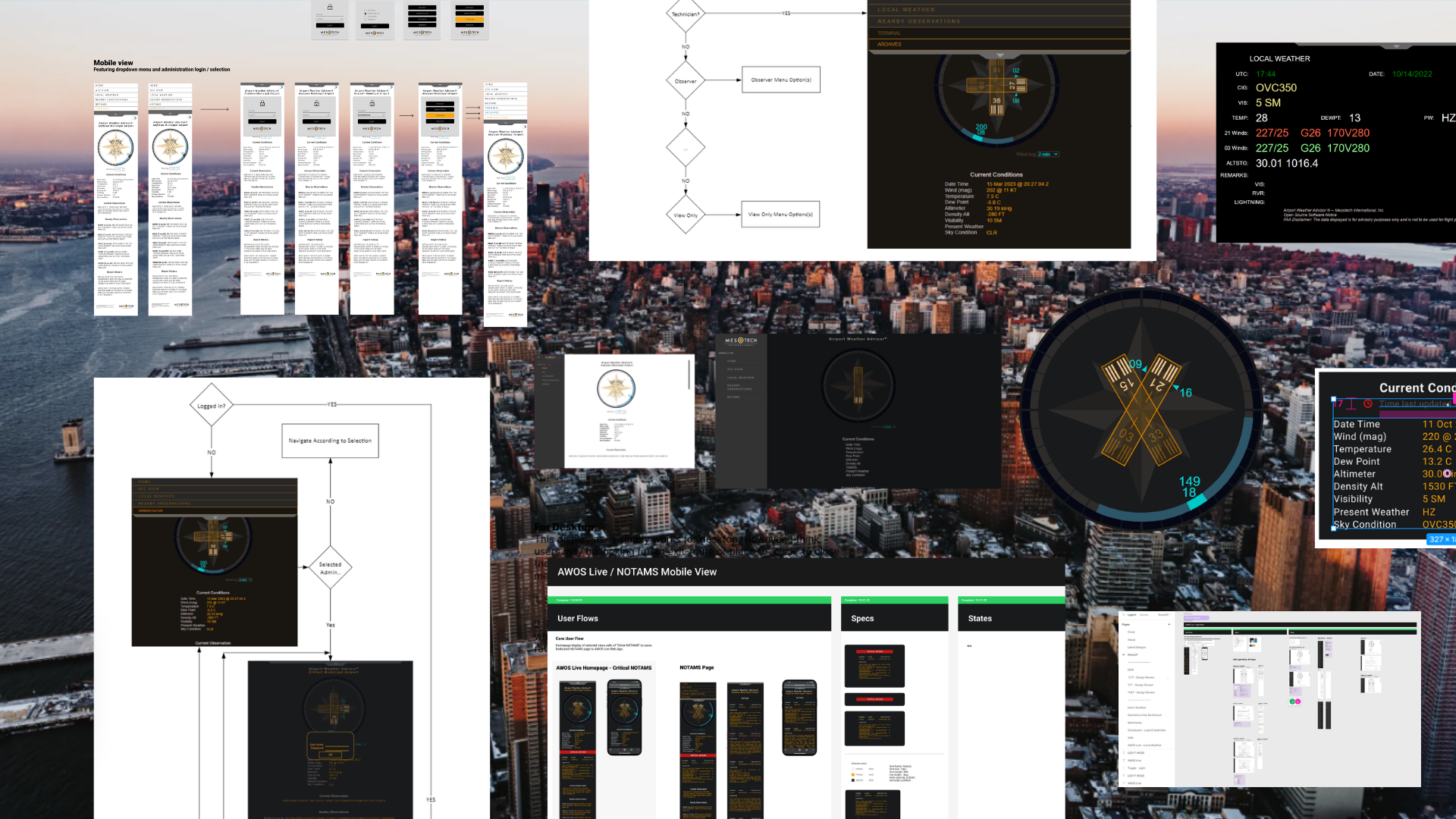
02 — AWOS.Live
Designing clarity into mission-critical aviation software
Product Design · UX Designer · Enterprise UX · UX Strategy
2022 - 2023
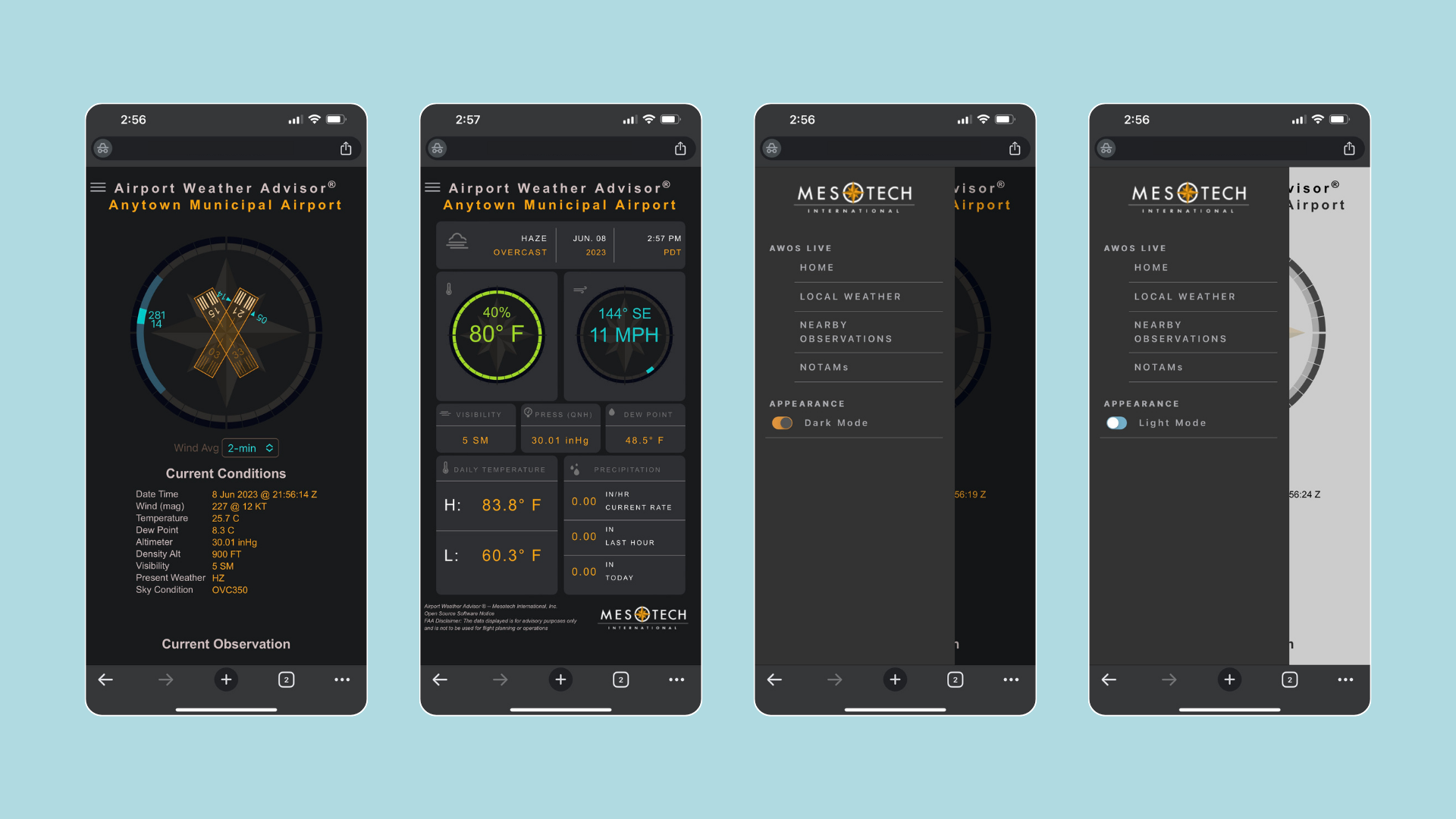
AWOS.Live brings critical aviation weather information into a browser-based experience for people operating across airports, airfields, and helipads. I helped redesign the platform around clearer information hierarchy, more intuitive navigation, and faster access to the information users need—especially when time matters.
Impact:
Faster scanning.
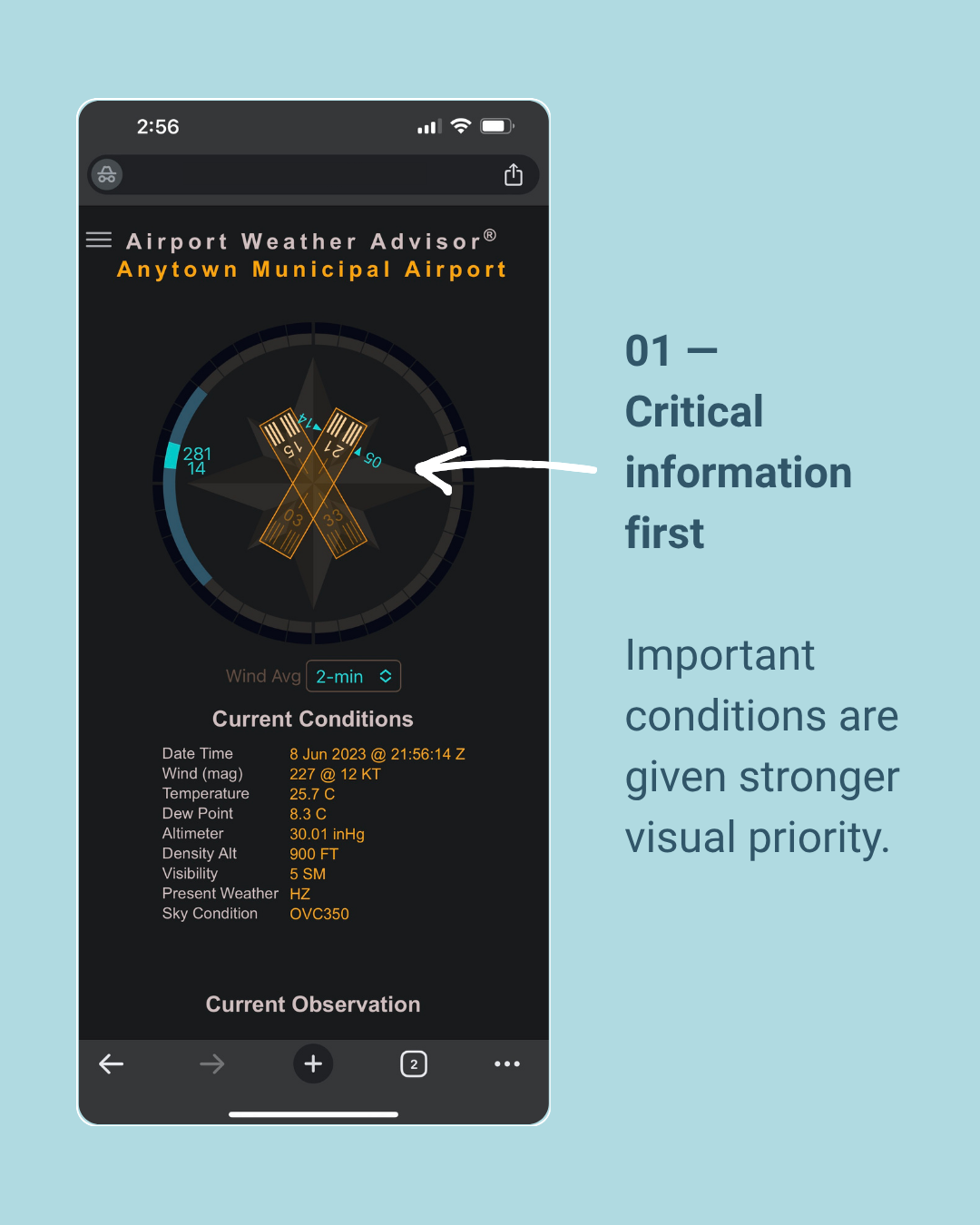
Critical information given greater visual priority
Clearer navigation.
Information easier to locate and move between
Greater consistency.
Repeatable patterns across the experience
The Short Version
The problem wasn't a lack of data.
Aviation weather systems generate a tremendous amount of information. And when you're designing for technical users, there's an easy trap to fall into: If the data exists, show it.
But through customer feedback and collaboration with our internal teams, something became increasingly clear. Users weren't asking for more. They needed to identify what mattered, quickly.
MORE DATA ≠ MORE CLARITY
Designing for the moment someone needs an answer
AWOS.Live wasn't something people opened simply to browse. The information supports real-world, time-sensitive decisions.
That changed my priorities as a designer.
Hierarchy before decoration. Navigation before novelty. Consistency before adding functionality.
Instead of asking, How much information can we fit here?
I started asking → What does this person need to understand first?
That seemingly small shift influenced the entire experience.
Making a complex system feel less complex
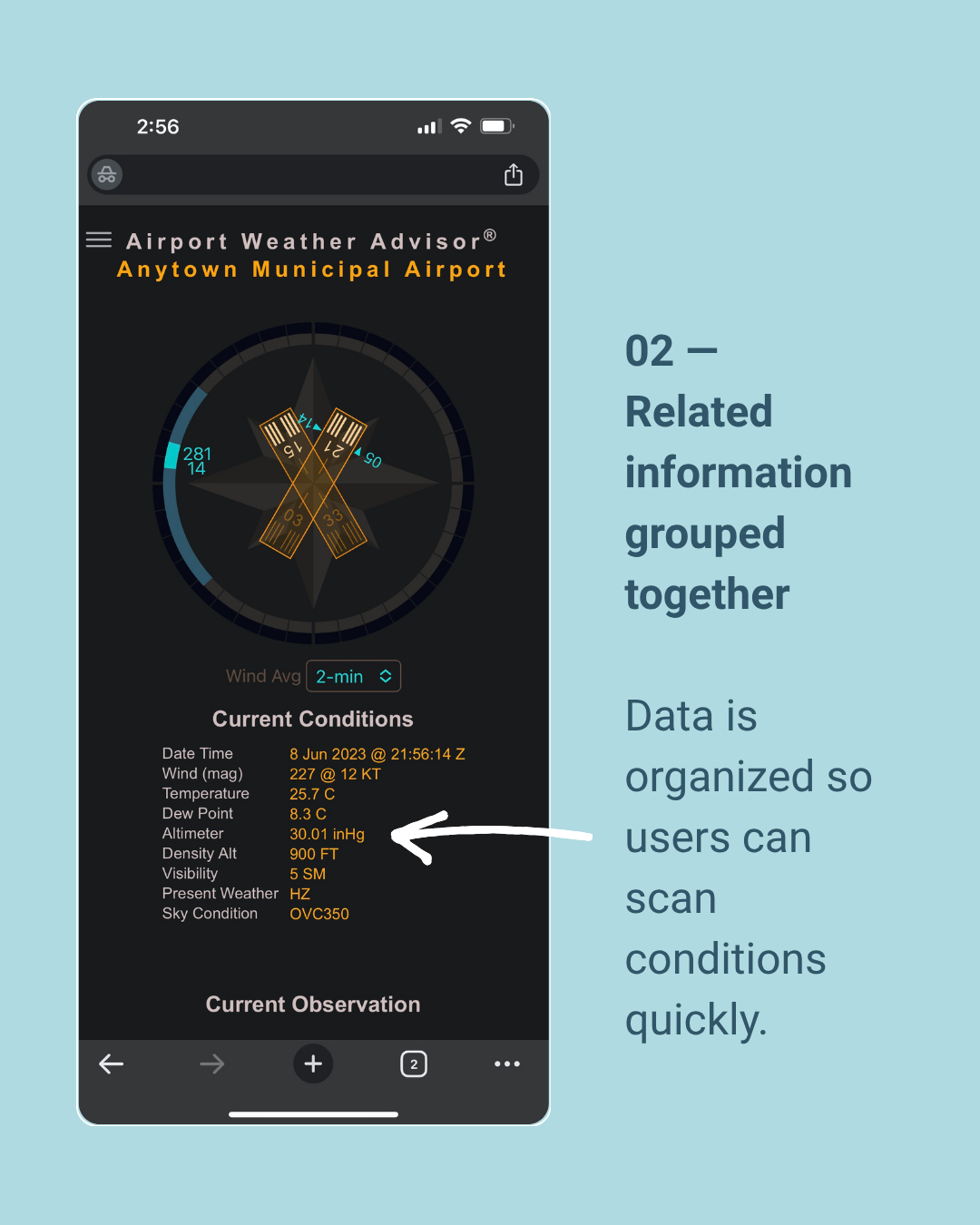
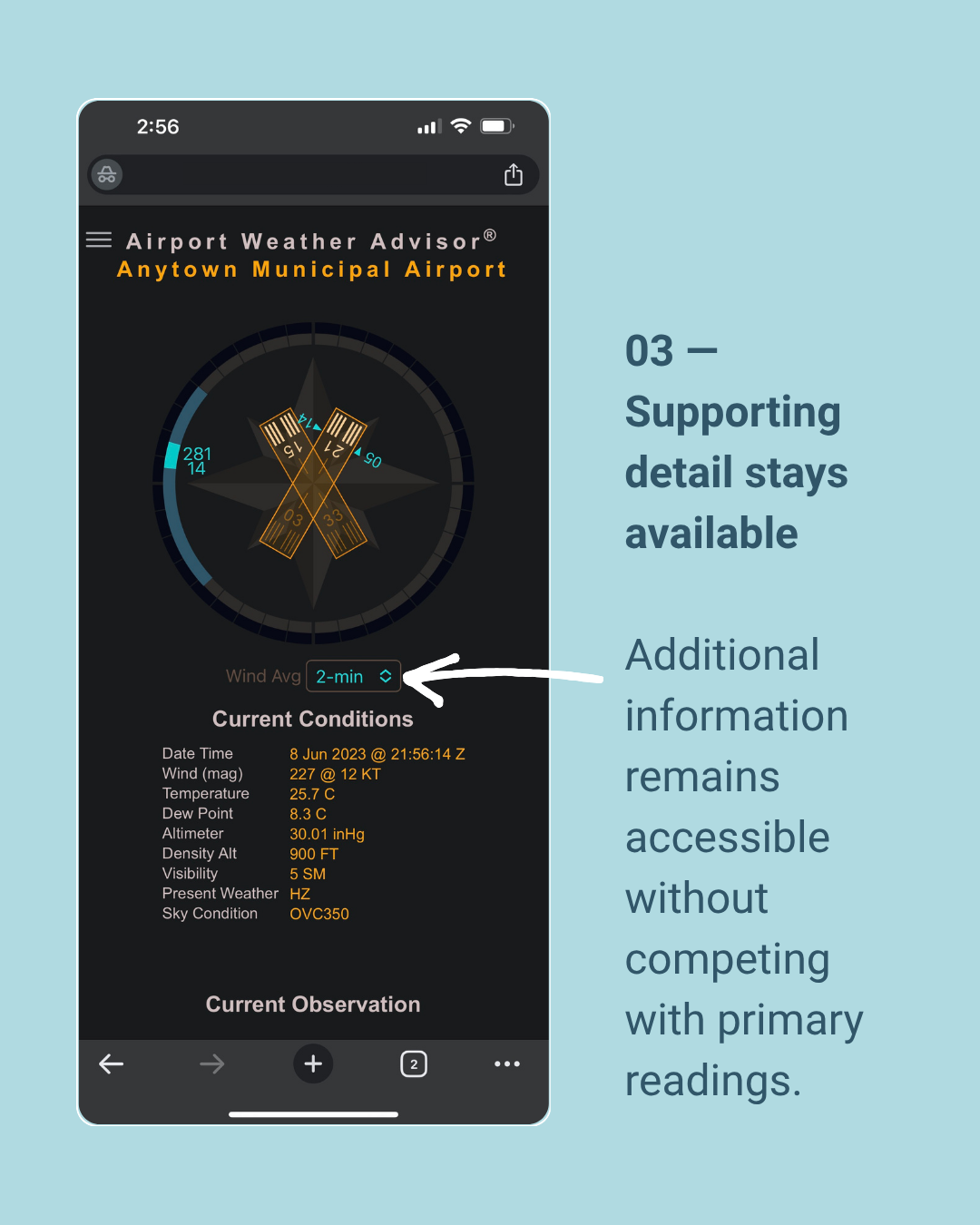
The resulting interface introduced clearer information hierarchy, simplified navigation, and more consistent interaction patterns across the platform.
This wasn't about making technical software feel simplistic. The users were experts.
The goal was to respect that expertise by removing unnecessary friction between them and the information they needed.
The takeaway
AWOS.Live taught me something I now consider fundamental to my work:
Simplification doesn't mean removing complexity from the product. It means removing complexity from the experience of using it.
That's a distinction I still think about constantly.